
Public-sector banks (PSBs) in India have reported an 11.2 per cent year-on-year rise in net profit, reaching a record 1.98 trillion in FY26, marking their fourth consecutive year of profitability, driven by sustained business growth, improved asset quality, and strong capital positions.

Credit card adoption is rapidly expanding beyond India's major metropolitan areas into Tier-II and Tier-III cities, driven by increasing incomes, digital awareness, and the integration of RuPay credit cards with UPI, according to a new report by SBI Card.

Prudential plc has announced its acquisition of a 75 per cent stake in Bharti Life Insurance for approximately 3,500 crore, a strategic move to secure majority ownership in the Indian life insurance market. This acquisition necessitates Prudential reducing its holding in ICICI Prudential Life Insurance to below 10 per cent.

India's mergers and acquisitions (M&A) market is projected to maintain an annual run-rate of approximately $200 billion, evenly split between domestic, inbound, and outbound transactions, despite global geopolitical turbulence, according to Rajesh Singhi, global co-head, M&A Advisory, Standard Chartered Bank.

"Policy sales will be one of the focus areas for the company because looking at the large insurance gap, large number of people being uncovered. The only right way to go is to increase the number of policies," said Amit Jhingran, MD & CEO, SBI Life Insurance.

SBI General Insurance aims to achieve a 10 per cent market share among private and standalone health insurers within approximately five years, up from its current 7.17 per cent, said Naveen Chandra Jha, managing director and chief executive officer, SBI General Insurance.

'We are staying away from making forward-looking statements on when we will reach 1 trillion, etc. But growth will be rapid; it's only a matter of time.'

Travel is now the dominant spending category for India's affluent consumers, who are prioritising experiences and luxury goods over retail buying, according to a new report.

Major Indian banks, including Axis Bank, HDFC Bank, and RBL Bank, have reported a decline in employee headcount in FY26, attributing the reductions to significant investments in technology and automation yielding productivity gains across operations.

Jio Financial Services and Munich-based Allianz Group have signed a binding agreement to establish a 50:50 joint venture for general and health insurance in India, building on an earlier reinsurance partnership.

Shares of Indian life insurance companies, particularly SBI Life Insurance and Canara HSBC Life Insurance, saw significant declines after the Department of Financial Services (DFS) secretary, M Nagaraju, stated that banks are being asked to avoid exclusive tie-ups with their own insurance subsidiaries and instead remain neutral.

India's outward foreign direct investment (FDI) saw a significant increase of 27.5 per cent, reaching $7.06 billion in March, primarily driven by a sharp rise in guarantees for overseas units, according to the Reserve Bank of India.

'It is a tradeoff between convenience and fraud prevention.'

The Indian banking sector is projected to experience a steady 9-13 per cent industrial credit growth in the first half of 2026, driven by capital expenditure, infrastructure development, and sectoral demand recovery, according to a Ficci-IBA survey.
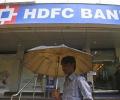
HDFC Bank, India's largest private-sector lender, has revised its FY27 growth trajectory, stepping back from earlier guidance to align with a more measured 12 per cent year-on-year expansion, citing geopolitical uncertainties.

HDFC Life Insurance reported a 4 per cent year-on-year increase in net profit to Rs 495.6 crore for Q4FY26, while its parent, HDFC Bank, announced a Rs 1,000 crore preferential share issuance to raise its stake to 50.5 per cent.

Life Insurance Corporation (LIC) has launched two new mobile applications, MyLIC for policyholders and Super Sales Saathi for its sales intermediaries, aiming to enhance digital agility and cater to the younger generation's needs. The apps, part of LIC's DIVE digital transformation platform, offer features like policy management, premium payments, and personalised recommendations.

Indian insurance companies are bracing for reduced profitability in Q4FY26, primarily due to the rationalisation of GST on retail life and health policies, leading to a loss of input tax credit, coupled with volatility in equity markets impacting investment income.
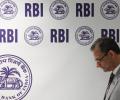
The Reserve Bank of India (RBI) has introduced stricter timelines for banks to process inward cross-border remittances, aiming to reduce delays in crediting funds to beneficiaries by mandating immediate customer intimation and more frequent nostro account reconciliation.

The Reserve Bank of India (RBI) is set to revise its directives for bank boards, aiming to alleviate operational burdens and enable them to concentrate on crucial policy and strategic decision-making, thereby enhancing corporate governance in the Indian banking sector.
